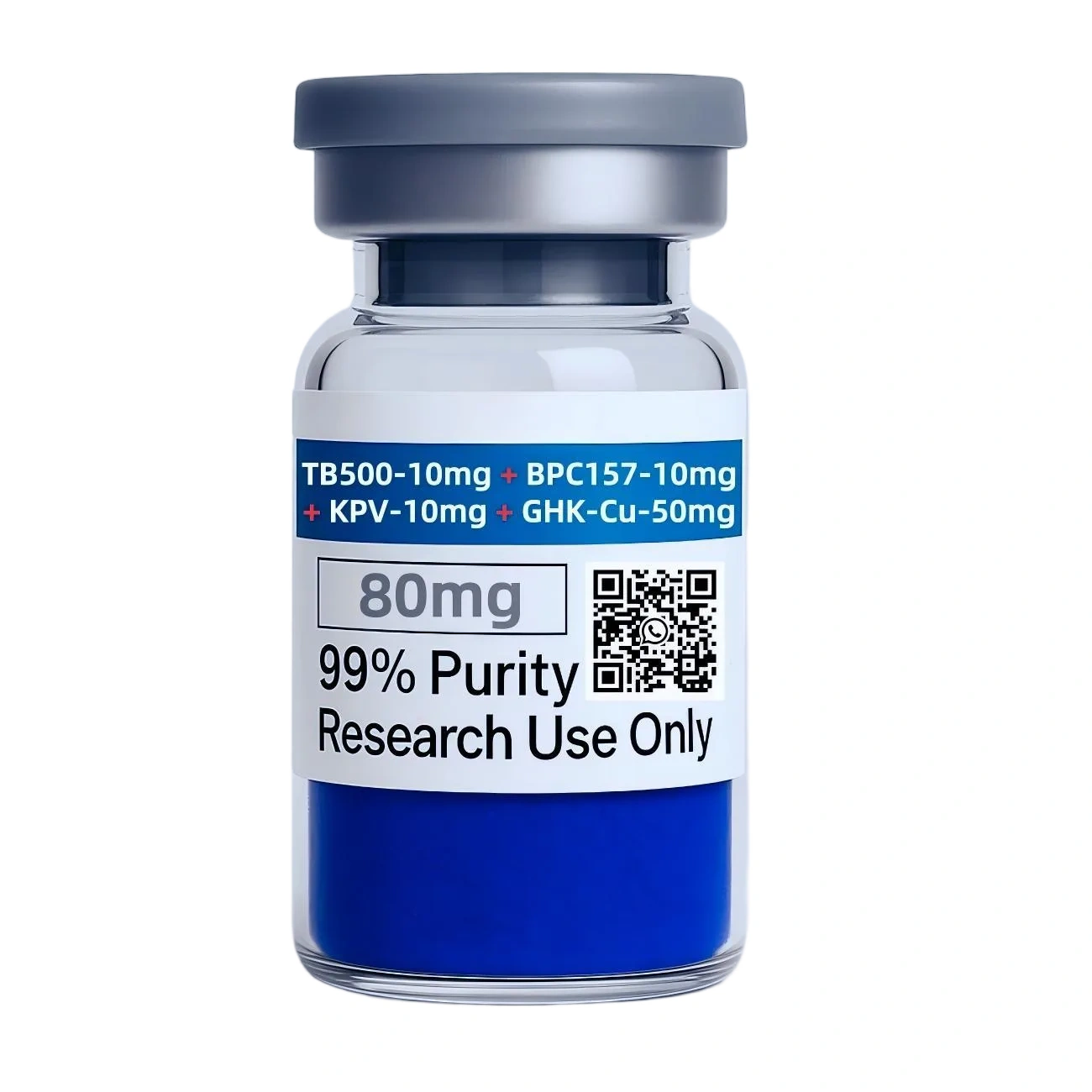
Research blend of TB-500 (full 43aa sequence), BPC-157, KPV, and GHK-Cu. Studied in preclinical settings examining combined anti-inflammatory, mucosal, and tissue repair pathways.
KLOW is listed in our china peptide catalog as a finished research compound from an established Chinese manufacturer. It is catalogued under the Skin & Hair, Tissue Repair, Inflammatory Wound Models, GI Mucosal Vs. GLOW KLOW = GLOW + KPV (additional anti-inflammatory component)
Available Variants
| Name | Strength | Pack Size | Purity | Availability |
|---|---|---|---|---|
| KLOW | 80 mg | 10 vials | ≥98% | In Stock |
| KLOW | 80 mg | 10 vials | — | In Stock |
Specification Highlights
Quality & Testing
Testing method: HPLC / LC-MS . Products are supplied against the specification shown on the applicable product page. The standard catalog purity specification is ≥98% unless otherwise stated. Product-specific specifications and quality-control information may vary by compound and batch. Every batch is tested by the manufacturer for purity and concentration as part of routine quality control, using methods such as HPLC and LC-MS. These results are kept in the manufacturer’s internal quality-control records and are not issued as a separate certificate or document.
Research Areas
Inflammatory Wound Healing Models Chronic wounds (diabetic ulcers, pressure injuries) and hypertrophic scarring are characterised by dysregulated inflammatory signalling — excessive and prolonged NF-κB-driven cytokine production that prevents transition from the inflammatory to the proliferative phase of repair. KPV’s NF-κB suppression, characterised in macrophage (RAW264.7, THP-1) and intestinal epithelial (Caco-2, HT-29) cell line models, is the mechanistic target in these research designs. In KLOW combination studies, KPV’s anti-inflammatory activity is assessed alongside BPC-157’s angiogenic effect and GHK-Cu’s collagen output using multiplexed endpoints — cytokine secretion (Luminex), wound closure (scratch assay), and ECM deposition (Sircol, Sirius Red staining). Intestinal Epithelial & Mucosal Research KPV is among the most studied α-MSH-derived tripeptides in GI research, with documented activity in TNBS-induced colitis, DSS colitis, and LPS-challenged intestinal epithelial models. KPV reduces IL-8, TNF-α, and IL-6 secretion from inflamed epithelial cells while preserving tight junction protein expression (ZO-1, occludin, claudin-1) in barrier integrity assays (TEER). In KLOW formulations studied in GI contexts, BPC-157’s established gastroprotective and cytoprotective activity in the GI tract (ulcer, anastomosis, and fistula models) complements KPV’s anti-inflammatory epithelial activity — providing both direct mucosal repair and inflammatory suppression simultaneously. Skin Inflammation & Dermatitis Models Inflammatory skin conditions (atopic dermatitis, psoriasis, rosacea) involve keratinocyte NF-κB activation, mast cell degranulation, and dysregulated cytokine networks alongside impaired barrier function. KPV’s MC1R-independent anti-inflammatory activity in keratinocytes (at concentrations of 1–100 nM) is studied alongside GHK-Cu’s barrier-restoring collagen and elastin stimulation in reconstructed human epidermis models and in vivo oxazolone-induced contact hypersensitivity models in mice. Histological endpoints (epidermal thickness, mast cell density, CD11b+ infiltrate) are complemented by cytokine profiling of dermal extracts. Multi-Pathway Combination Pharmacology A specific research application for KLOW is the study of combination pharmacology — whether four mechanistically distinct compounds produce additive or synergistic effects when applied simultaneously. Full factorial dose-response designs (varying each component independently and in combination) are used in multi-well plate formats to generate interaction surface data. Bliss independence and Loewe additivity models are applied to quantify whether combination effects exceed the predicted additive outcome. These studies inform whether fixed-ratio blends (as in KLOW) are pharmacologically advantageous over individual compound administration at equivalent total doses. ## Sourcing KLOW From China
KLOW is available through our platform as a china peptide sourced directly from an established Chinese manufacturer. Three points define how we handle it:
- Factory-direct, not trader-sourced. We confirm availability and specification with the manufacturer before the order is confirmed. There is no intermediary resale of unknown-origin vials in this catalog.
- Specification before shipment. The purity and concentration specification shown on this page is the manufacturer’s batch specification. Product-specific quality-control information travels with the order.
- Research-use discipline. Like every listing in our catalog, KLOW is supplied for laboratory research use only, under strict research-use terms.
For buyers comparing chinese peptides suppliers, the practical test is whether the seller can name the manufacturer and show the batch documentation. We work the other way around: the manufacturer and the documentation are the offer. Browse the full catalog or see how sourcing works.
Available Variants
| Name | Strength | Pack Size | Purity | Availability |
|---|---|---|---|---|
| KLOW | 80 mg | 10 vials | ≥98% | In Stock |
| KLOW | 80 mg | 10 vials | — | In Stock |
Specification Highlights
Quality & Testing
Testing method: HPLC / LC-MS . Products are supplied against the specification shown on the applicable product page. The standard catalog purity specification is ≥98% unless otherwise stated. Product-specific specifications and quality-control information may vary by compound and batch. Every batch is tested by the manufacturer for purity and concentration as part of routine quality control, using methods such as HPLC and LC-MS. These results are kept in the manufacturer’s internal quality-control records and are not issued as a separate certificate or document.
Research Areas
Inflammatory Wound Healing Models Chronic wounds (diabetic ulcers, pressure injuries) and hypertrophic scarring are characterised by dysregulated inflammatory signalling — excessive and prolonged NF-κB-driven cytokine production that prevents transition from the inflammatory to the proliferative phase of repair. KPV’s NF-κB suppression, characterised in macrophage (RAW264.7, THP-1) and intestinal epithelial (Caco-2, HT-29) cell line models, is the mechanistic target in these research designs. In KLOW combination studies, KPV’s anti-inflammatory activity is assessed alongside BPC-157’s angiogenic effect and GHK-Cu’s collagen output using multiplexed endpoints — cytokine secretion (Luminex), wound closure (scratch assay), and ECM deposition (Sircol, Sirius Red staining). Intestinal Epithelial & Mucosal Research KPV is among the most studied α-MSH-derived tripeptides in GI research, with documented activity in TNBS-induced colitis, DSS colitis, and LPS-challenged intestinal epithelial models. KPV reduces IL-8, TNF-α, and IL-6 secretion from inflamed epithelial cells while preserving tight junction protein expression (ZO-1, occludin, claudin-1) in barrier integrity assays (TEER). In KLOW formulations studied in GI contexts, BPC-157’s established gastroprotective and cytoprotective activity in the GI tract (ulcer, anastomosis, and fistula models) complements KPV’s anti-inflammatory epithelial activity — providing both direct mucosal repair and inflammatory suppression simultaneously. Skin Inflammation & Dermatitis Models Inflammatory skin conditions (atopic dermatitis, psoriasis, rosacea) involve keratinocyte NF-κB activation, mast cell degranulation, and dysregulated cytokine networks alongside impaired barrier function. KPV’s MC1R-independent anti-inflammatory activity in keratinocytes (at concentrations of 1–100 nM) is studied alongside GHK-Cu’s barrier-restoring collagen and elastin stimulation in reconstructed human epidermis models and in vivo oxazolone-induced contact hypersensitivity models in mice. Histological endpoints (epidermal thickness, mast cell density, CD11b+ infiltrate) are complemented by cytokine profiling of dermal extracts. Multi-Pathway Combination Pharmacology A specific research application for KLOW is the study of combination pharmacology — whether four mechanistically distinct compounds produce additive or synergistic effects when applied simultaneously. Full factorial dose-response designs (varying each component independently and in combination) are used in multi-well plate formats to generate interaction surface data. Bliss independence and Loewe additivity models are applied to quantify whether combination effects exceed the predicted additive outcome. These studies inform whether fixed-ratio blends (as in KLOW) are pharmacologically advantageous over individual compound administration at equivalent total doses.
Compound Profile
KLOW is a pre-mixed lyophilized research formulation containing four compounds: TB-500 (Thymosin Beta-4 synthetic analogue), BPC-157 (Body Protection Compound-157), KPV (Lys-Pro-Val tripeptide), and GHK-Cu (copper peptide). KLOW extends the GLOW formulation (TB-500 + BPC-157 + GHK-Cu) by incorporating KPV, an anti-inflammatory tripeptide derived from the C-terminus of alpha-melanocyte-stimulating hormone (α-MSH). KPV adds a fourth mechanistic layer: direct suppression of NF-κB nuclear translocation and inflammatory cytokine production, particularly relevant in research models where chronic or excessive inflammation is a co-pathology alongside impaired tissue regeneration. The combination targets dermal, mucosal, and connective tissue repair research with a concurrent anti-inflammatory dimension. The scientific basis for adding KPV to the GLOW triplex is KPV’s established anti-inflammatory activity in intestinal epithelial and macrophage models, its preservation of epithelial tight junctions under inflammatory challenge, and its documented efficacy in murine colitis models. In dermal research contexts, inflammation is a critical regulator of wound healing quality — excessive NF-κB-driven inflammation promotes scarring (hypertrophic scar, keloid) while inadequate inflammation impairs innate immune debridement. KPV’s selective NF-κB suppression, combined with TB-500’s actin-dependent migration, BPC-157’s angiogenic signalling, and GHK-Cu’s ECM remodelling activity, creates a four-pathway approach to tissue repair modelling that spans the full healing cascade. Peptides of China supplies KLOW as lyophilized powder in sealed vials. Each component is individually purity-verified by HPLC before blending. Certificates of Analysis available per batch. Wholesale quantities on request. For laboratory research use only.
Profile
Formulation Type Pre-mixed Lyophilized Research Blend (4 components) Component 1 TB-500 (Thymosin Beta-4 fragment) Component 2 BPC-157 (Body Protection Compound-157) Component 3 KPV (Lys-Pro-Val — α-MSH C-terminal tripeptide) Component 4 GHK-Cu (Glycyl-L-histidyl-L-lysine : Cu²⁺) KPV Mechanism NF-κB suppression, epithelial barrier protection, IL-1β/TNF-α reduction Research Category Skin & Hair, Tissue Repair, Inflammatory Wound Models, GI Mucosal Vs. GLOW KLOW = GLOW + KPV (additional anti-inflammatory component)
Available Variants
| Name | Strength | Pack Size | Purity | Availability |
|---|---|---|---|---|
| KLOW | 80 mg | 10 vials | ≥98% | In Stock |
| KLOW | 80 mg | 10 vials | — | In Stock |
Specification Highlights
Quality & Testing
Testing method: HPLC / LC-MS . Products are supplied against the specification shown on the applicable product page. The standard catalog purity specification is ≥98% unless otherwise stated. Product-specific specifications and quality-control information may vary by compound and batch. Every batch is tested by the manufacturer for purity and concentration as part of routine quality control, using methods such as HPLC and LC-MS. These results are kept in the manufacturer’s internal quality-control records and are not issued as a separate certificate or document.
Research Areas
Inflammatory Wound Healing Models Chronic wounds (diabetic ulcers, pressure injuries) and hypertrophic scarring are characterised by dysregulated inflammatory signalling — excessive and prolonged NF-κB-driven cytokine production that prevents transition from the inflammatory to the proliferative phase of repair. KPV’s NF-κB suppression, characterised in macrophage (RAW264.7, THP-1) and intestinal epithelial (Caco-2, HT-29) cell line models, is the mechanistic target in these research designs. In KLOW combination studies, KPV’s anti-inflammatory activity is assessed alongside BPC-157’s angiogenic effect and GHK-Cu’s collagen output using multiplexed endpoints — cytokine secretion (Luminex), wound closure (scratch assay), and ECM deposition (Sircol, Sirius Red staining). Intestinal Epithelial & Mucosal Research KPV is among the most studied α-MSH-derived tripeptides in GI research, with documented activity in TNBS-induced colitis, DSS colitis, and LPS-challenged intestinal epithelial models. KPV reduces IL-8, TNF-α, and IL-6 secretion from inflamed epithelial cells while preserving tight junction protein expression (ZO-1, occludin, claudin-1) in barrier integrity assays (TEER). In KLOW formulations studied in GI contexts, BPC-157’s established gastroprotective and cytoprotective activity in the GI tract (ulcer, anastomosis, and fistula models) complements KPV’s anti-inflammatory epithelial activity — providing both direct mucosal repair and inflammatory suppression simultaneously. Skin Inflammation & Dermatitis Models Inflammatory skin conditions (atopic dermatitis, psoriasis, rosacea) involve keratinocyte NF-κB activation, mast cell degranulation, and dysregulated cytokine networks alongside impaired barrier function. KPV’s MC1R-independent anti-inflammatory activity in keratinocytes (at concentrations of 1–100 nM) is studied alongside GHK-Cu’s barrier-restoring collagen and elastin stimulation in reconstructed human epidermis models and in vivo oxazolone-induced contact hypersensitivity models in mice. Histological endpoints (epidermal thickness, mast cell density, CD11b+ infiltrate) are complemented by cytokine profiling of dermal extracts. Multi-Pathway Combination Pharmacology A specific research application for KLOW is the study of combination pharmacology — whether four mechanistically distinct compounds produce additive or synergistic effects when applied simultaneously. Full factorial dose-response designs (varying each component independently and in combination) are used in multi-well plate formats to generate interaction surface data. Bliss independence and Loewe additivity models are applied to quantify whether combination effects exceed the predicted additive outcome. These studies inform whether fixed-ratio blends (as in KLOW) are pharmacologically advantageous over individual compound administration at equivalent total doses.