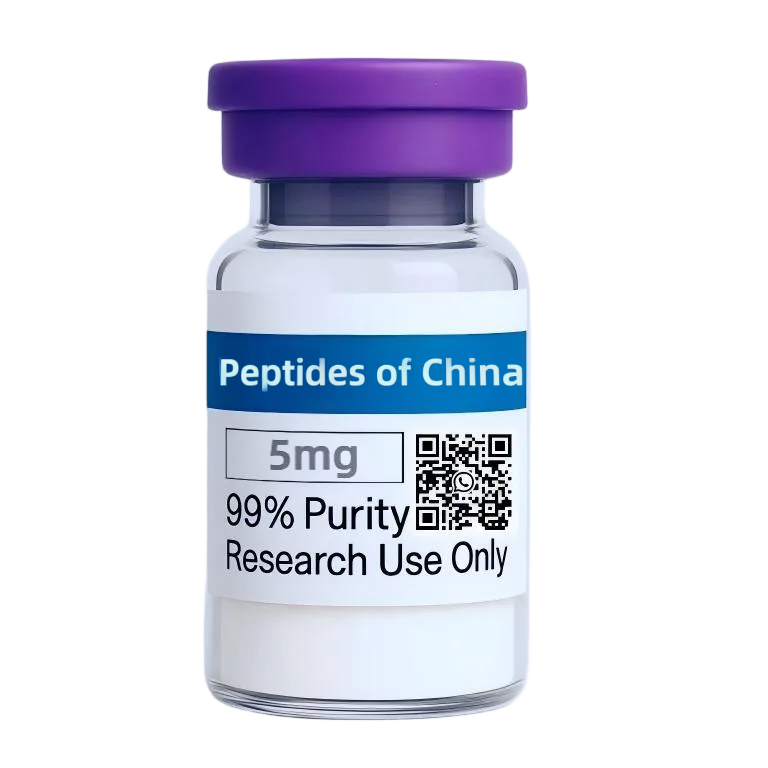
Melanotan-1 (Afamelanotide) — full-length alpha-MSH analog for melanocortin receptor research. Linear 13-amino-acid structure. Sourced from verified Chinese manufacturer, purity tested per batch.
Melanotan-1 is a research compound available through our china peptide catalog as a finished, lyophilized vial from an established Chinese manufacturer. It belongs to the Linear α-MSH analogue (MC1R agonist)
Research Areas
Melanogenesis, MC1R pharmacology, photoprotection models, skin biology, anti-inflammatory signaling
Available Variants
| Name | Strength | Pack Size | Purity | Availability |
|---|---|---|---|---|
| Melanotan-1 | 10 mg | 10 vials | ≥98% | In Stock |
| Melanotan-1 | 10 mg | 10 vials | — | In Stock |
Specification Highlights
Quality & Testing
Testing method: HPLC / LC-MS . Products are supplied against the specification shown on the applicable product page. The standard catalog purity specification is ≥98% unless otherwise stated. Product-specific specifications and quality-control information may vary by compound and batch. Every batch is tested by the manufacturer for purity and concentration as part of routine quality control, using methods such as HPLC and LC-MS. These results are kept in the manufacturer’s internal quality-control records and are not issued as a separate certificate or document.
Variant Notes
Synthetic analogue of alpha-melanocyte-stimulating hormone. Investigated in models of melanocortin signalling, primarily through the MC1R receptor, as well as melanogenesis and cellular responses to ultraviolet exposure.
Research Areas
Melanogenesis and MC1R Pharmacology Melanotan-1’s primary research application is MC1R-mediated melanogenesis in melanocyte cultures and skin models. Studies have characterized the dose-response relationship between Melanotan-1 concentration and cAMP elevation, MITF transcription factor upregulation, tyrosinase activity, and eumelanin production. As a linear α-MSH analogue with high MC1R affinity, it serves as a reference agonist in structure-activity studies of melanocortin receptor pharmacology. Anti-Inflammatory Melanocortin Signaling MC1R is expressed on macrophages, neutrophils, and endothelial cells where melanocortin signaling reduces pro-inflammatory cytokine production (TNF-α, IL-1β, IL-6) and NF-κB activation. Research has examined Melanotan-1’s anti-inflammatory properties in macrophage stimulation models and rodent inflammatory disease models, exploring whether MC1R-selective agonism produces anti-inflammatory effects separate from its melanogenic activity. Photoprotection Research MC1R-mediated eumelanin production is the primary UV-protective pigmentation mechanism in human skin. Research has examined Melanotan-1’s ability to increase eumelanin levels in skin cell cultures and animal models, reduce UV-induced DNA damage (cyclobutane pyrimidine dimers, 8-oxoguanine), and modulate UV-induced apoptosis in keratinocytes. These studies contribute to understanding of how MC1R pharmacology interacts with the UV response in skin biology. ## Sourcing Melanotan-1 From China
Melanotan-1 is available through our platform as a china peptide sourced directly from an established Chinese manufacturer. Three points define how we handle it:
- Factory-direct, not trader-sourced. We confirm availability and specification with the manufacturer before the order is confirmed. There is no intermediary resale of unknown-origin vials in this catalog.
- Specification before shipment. The purity and concentration specification shown on this page is the manufacturer’s batch specification. Product-specific quality-control information travels with the order.
- Research-use discipline. Like every listing in our catalog, Melanotan-1 is supplied for laboratory research use only, under strict research-use terms.
For buyers comparing chinese peptides suppliers, the practical test is whether the seller can name the manufacturer and show the batch documentation. We work the other way around: the manufacturer and the documentation are the offer. Browse the full catalog or see how sourcing works.
Available Variants
| Name | Strength | Pack Size | Purity | Availability |
|---|---|---|---|---|
| Melanotan-1 | 10 mg | 10 vials | ≥98% | In Stock |
| Melanotan-1 | 10 mg | 10 vials | — | In Stock |
Specification Highlights
Quality & Testing
Testing method: HPLC / LC-MS . Products are supplied against the specification shown on the applicable product page. The standard catalog purity specification is ≥98% unless otherwise stated. Product-specific specifications and quality-control information may vary by compound and batch. Every batch is tested by the manufacturer for purity and concentration as part of routine quality control, using methods such as HPLC and LC-MS. These results are kept in the manufacturer’s internal quality-control records and are not issued as a separate certificate or document.
Variant Notes
Synthetic analogue of alpha-melanocyte-stimulating hormone. Investigated in models of melanocortin signalling, primarily through the MC1R receptor, as well as melanogenesis and cellular responses to ultraviolet exposure.
Research Areas
Melanogenesis and MC1R Pharmacology Melanotan-1’s primary research application is MC1R-mediated melanogenesis in melanocyte cultures and skin models. Studies have characterized the dose-response relationship between Melanotan-1 concentration and cAMP elevation, MITF transcription factor upregulation, tyrosinase activity, and eumelanin production. As a linear α-MSH analogue with high MC1R affinity, it serves as a reference agonist in structure-activity studies of melanocortin receptor pharmacology. Anti-Inflammatory Melanocortin Signaling MC1R is expressed on macrophages, neutrophils, and endothelial cells where melanocortin signaling reduces pro-inflammatory cytokine production (TNF-α, IL-1β, IL-6) and NF-κB activation. Research has examined Melanotan-1’s anti-inflammatory properties in macrophage stimulation models and rodent inflammatory disease models, exploring whether MC1R-selective agonism produces anti-inflammatory effects separate from its melanogenic activity. Photoprotection Research MC1R-mediated eumelanin production is the primary UV-protective pigmentation mechanism in human skin. Research has examined Melanotan-1’s ability to increase eumelanin levels in skin cell cultures and animal models, reduce UV-induced DNA damage (cyclobutane pyrimidine dimers, 8-oxoguanine), and modulate UV-induced apoptosis in keratinocytes. These studies contribute to understanding of how MC1R pharmacology interacts with the UV response in skin biology.
Compound Profile
Melanotan-1 (Afamelanotide) is a synthetic linear analogue of α-melanocyte-stimulating hormone (α-MSH), the endogenous 13-amino acid tridecapeptide cleaved from POMC (pro-opiomelanocortin). The key structural modifications relative to native α-MSH are Nle⁴ (norleucine replacing methionine at position 4) and D-Phe⁷ (D-phenylalanine replacing L-phenylalanine at position 7), which together increase receptor binding affinity and confer metabolic stability. Melanotan-1 activates melanocortin receptors MC1R and MC3R — with primary research interest in MC1R-mediated melanogenesis in skin melanocytes. As a selective MC1R agonist, Melanotan-1 stimulates eumelanin synthesis in melanocytes via cAMP-dependent signaling, increasing skin pigmentation. Research interest in Melanotan-1 extends beyond photoprotection: MC1R is expressed in immune cells, neurons, and endothelial cells, where melanocortin signaling contributes to anti-inflammatory responses and cellular stress protection. The compound is structurally distinct from Melanotan-2 (which is cyclic and has significantly higher potency at MC3R/MC4R, producing aphrodisiac and anorectic effects alongside melanogenesis). This distinction makes Melanotan-1 the preferred research tool when MC1R-selective skin biology is the focus. Peptides of China supplies Melanotan-1 as a lyophilized powder at 99%+ purity, verified by HPLC and Mass Spectrometry. Every batch is tested by the manufacturer for purity and concentration as part of routine quality control. All products are for laboratory research use only and are not for human consumption.
Profile
Research Areas
Melanogenesis, MC1R pharmacology, photoprotection models, skin biology, anti-inflammatory signaling
Available Variants
| Name | Strength | Pack Size | Purity | Availability |
|---|---|---|---|---|
| Melanotan-1 | 10 mg | 10 vials | ≥98% | In Stock |
| Melanotan-1 | 10 mg | 10 vials | — | In Stock |
Specification Highlights
Quality & Testing
Testing method: HPLC / LC-MS . Products are supplied against the specification shown on the applicable product page. The standard catalog purity specification is ≥98% unless otherwise stated. Product-specific specifications and quality-control information may vary by compound and batch. Every batch is tested by the manufacturer for purity and concentration as part of routine quality control, using methods such as HPLC and LC-MS. These results are kept in the manufacturer’s internal quality-control records and are not issued as a separate certificate or document.
Variant Notes
Synthetic analogue of alpha-melanocyte-stimulating hormone. Investigated in models of melanocortin signalling, primarily through the MC1R receptor, as well as melanogenesis and cellular responses to ultraviolet exposure.
Research Areas
Melanogenesis and MC1R Pharmacology Melanotan-1’s primary research application is MC1R-mediated melanogenesis in melanocyte cultures and skin models. Studies have characterized the dose-response relationship between Melanotan-1 concentration and cAMP elevation, MITF transcription factor upregulation, tyrosinase activity, and eumelanin production. As a linear α-MSH analogue with high MC1R affinity, it serves as a reference agonist in structure-activity studies of melanocortin receptor pharmacology. Anti-Inflammatory Melanocortin Signaling MC1R is expressed on macrophages, neutrophils, and endothelial cells where melanocortin signaling reduces pro-inflammatory cytokine production (TNF-α, IL-1β, IL-6) and NF-κB activation. Research has examined Melanotan-1’s anti-inflammatory properties in macrophage stimulation models and rodent inflammatory disease models, exploring whether MC1R-selective agonism produces anti-inflammatory effects separate from its melanogenic activity. Photoprotection Research MC1R-mediated eumelanin production is the primary UV-protective pigmentation mechanism in human skin. Research has examined Melanotan-1’s ability to increase eumelanin levels in skin cell cultures and animal models, reduce UV-induced DNA damage (cyclobutane pyrimidine dimers, 8-oxoguanine), and modulate UV-induced apoptosis in keratinocytes. These studies contribute to understanding of how MC1R pharmacology interacts with the UV response in skin biology.