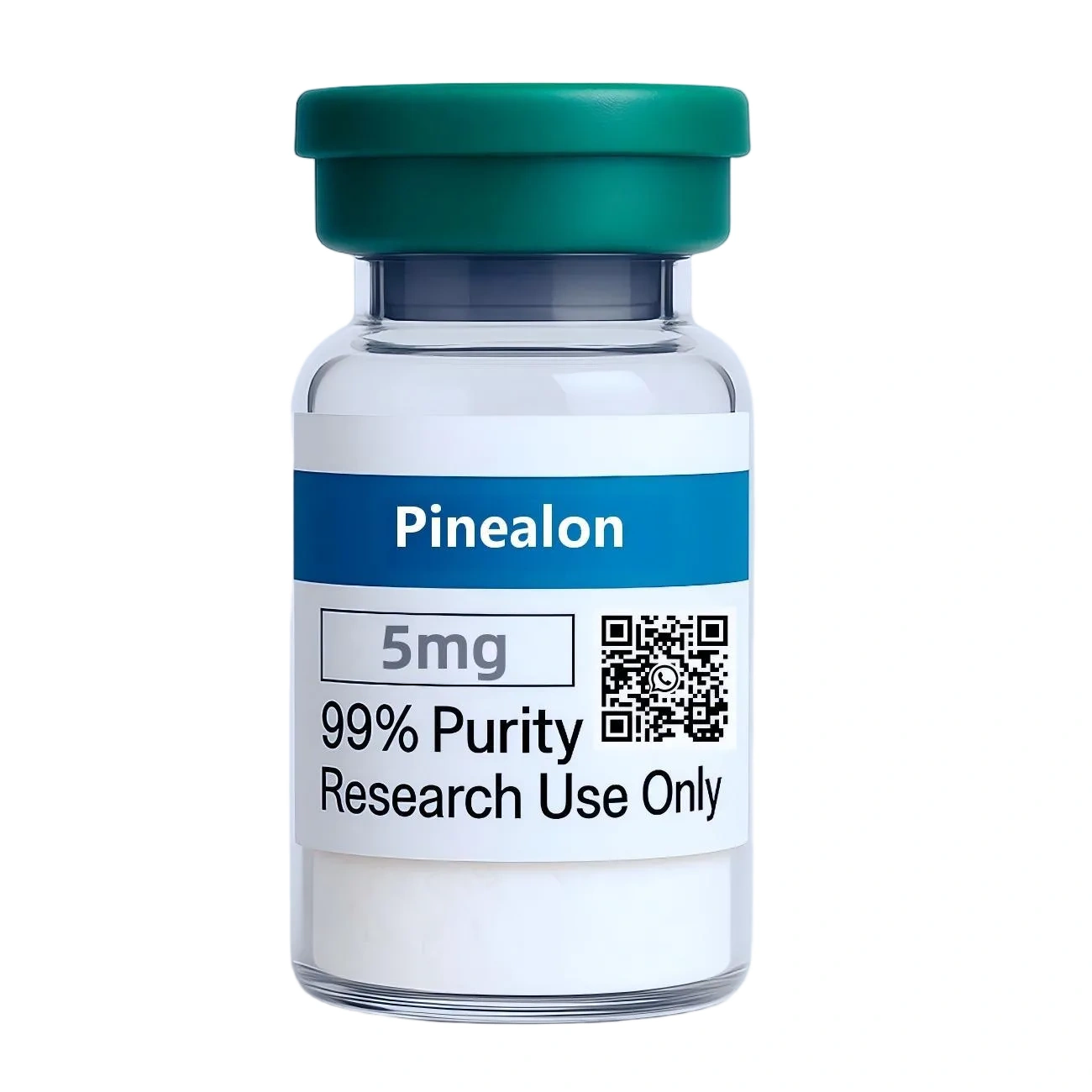
Short peptide bioregulator studied in connection with pineal gland and nervous system function.
Pinealon is a research compound available through our china peptide catalog as a finished, lyophilized vial from an established Chinese manufacturer. It belongs to the Synthetic tripeptide bioregulator (pineal origin)
Research Areas
Neuroprotection, circadian biology, aging research, gene expression modulation, oxidative stress
Available Variants
| Name | Strength | Pack Size | Purity | Availability |
|---|---|---|---|---|
| Pinealon | 10 mg | 10 vials | ≥98% | In Stock |
Specification Highlights
Quality & Testing
Testing method: HPLC / LC-MS ([“HPLC”,“LC-MS”,“Water Content”]) . Products are supplied against the specification shown on the applicable product page. The standard catalog purity specification is ≥98% unless otherwise stated. Product-specific specifications and quality-control information may vary by compound and batch. Available documentation: .
**Where provided, these documents reflect the manufacturer’s batch testing for this compound.
Research Areas
Neuroprotection and Oxidative Stress Research Research has examined pinealon’s effects on neuronal cell viability under oxidative challenge conditions — hydrogen peroxide exposure, glutamate toxicity, and serum deprivation models. Studies have measured mitochondrial membrane potential, ROS levels, and apoptosis markers (caspase-3, PARP cleavage) in neurons treated with pinealon versus vehicle controls. The proposed neuroprotective mechanism involves regulation of antioxidant gene expression and mitochondrial protective pathways. Circadian and Pineal Biology Research Pinealon’s derivation from pineal research connects it to circadian biology — the pineal gland synthesizes melatonin under SCN control and is central to circadian timekeeping. Research has examined whether pinealon affects melatonin synthesis enzymes (AANAT, ASMT) in pinealocyte cultures, and whether its administration alters circadian behavioral parameters (locomotor activity rhythms) in aged rodents where circadian amplitude typically declines. Aging and Longevity Research Pinealon is studied within the broader framework of peptide bioregulator research for aging, where short peptides derived from specific glands or tissues are proposed to restore age-related decline in target organ function. Research protocols in aged rodent models have examined cognitive performance (Morris water maze, radial arm maze), brain morphology (hippocampal neuron density), and oxidative damage markers following pinealon treatment — contributing to the mechanistic evaluation of peptide bioregulators in gerontology research. ## Sourcing Pinealon From China
Pinealon is available through our platform as a china peptide sourced directly from an established Chinese manufacturer. Three points define how we handle it:
- Factory-direct, not trader-sourced. We confirm availability and specification with the manufacturer before the order is confirmed. There is no intermediary resale of unknown-origin vials in this catalog.
- Specification before shipment. The purity and concentration specification shown on this page is the manufacturer’s batch specification. Product-specific quality-control information travels with the order.
- Research-use discipline. Like every listing in our catalog, Pinealon is supplied for laboratory research use only, under strict research-use terms.
For buyers comparing chinese peptides suppliers, the practical test is whether the seller can name the manufacturer and show the batch documentation. We work the other way around: the manufacturer and the documentation are the offer. Browse the full catalog or see how sourcing works.
Available Variants
| Name | Strength | Pack Size | Purity | Availability |
|---|---|---|---|---|
| Pinealon | 10 mg | 10 vials | ≥98% | In Stock |
Specification Highlights
Quality & Testing
Testing method: HPLC / LC-MS ([“HPLC”,“LC-MS”,“Water Content”]) . Products are supplied against the specification shown on the applicable product page. The standard catalog purity specification is ≥98% unless otherwise stated. Product-specific specifications and quality-control information may vary by compound and batch. Available documentation: .
**Where provided, these documents reflect the manufacturer’s batch testing for this compound.
Research Areas
Neuroprotection and Oxidative Stress Research Research has examined pinealon’s effects on neuronal cell viability under oxidative challenge conditions — hydrogen peroxide exposure, glutamate toxicity, and serum deprivation models. Studies have measured mitochondrial membrane potential, ROS levels, and apoptosis markers (caspase-3, PARP cleavage) in neurons treated with pinealon versus vehicle controls. The proposed neuroprotective mechanism involves regulation of antioxidant gene expression and mitochondrial protective pathways. Circadian and Pineal Biology Research Pinealon’s derivation from pineal research connects it to circadian biology — the pineal gland synthesizes melatonin under SCN control and is central to circadian timekeeping. Research has examined whether pinealon affects melatonin synthesis enzymes (AANAT, ASMT) in pinealocyte cultures, and whether its administration alters circadian behavioral parameters (locomotor activity rhythms) in aged rodents where circadian amplitude typically declines. Aging and Longevity Research Pinealon is studied within the broader framework of peptide bioregulator research for aging, where short peptides derived from specific glands or tissues are proposed to restore age-related decline in target organ function. Research protocols in aged rodent models have examined cognitive performance (Morris water maze, radial arm maze), brain morphology (hippocampal neuron density), and oxidative damage markers following pinealon treatment — contributing to the mechanistic evaluation of peptide bioregulators in gerontology research.
Compound Profile
Pinealon (Glu-Asp-Arg) is a synthetic tripeptide bioregulator developed from research into peptide fractions of the pineal gland. It belongs to a class of short peptide bioregulators studied for their proposed tissue-specific effects on gene expression regulation — the concept underlying the cytomax and peptide bioregulator research programs originating in Russian gerontology research. Pinealon is the shortest member of the pineal peptide series, and research has examined its interactions with deoxyribonucleic acid sequences and chromatin-associated proteins, with proposed specificity for regulatory regions in the promoters of genes relevant to pineal and neuronal function. Research interest in pinealon spans neuroprotection, circadian regulation, and cellular stress response. In vitro studies have examined pinealon’s effects on neuronal cell cultures under conditions of oxidative stress — measuring cell viability markers, mitochondrial potential, and apoptosis rate. Animal studies have assessed cognitive and behavioral outcomes in aged rodent models, examining whether pinealon affects hippocampal neuron morphology, memory performance, and circadian behavioral parameters. Proposed mechanisms include regulation of gene transcription via DNA interaction and modulation of oxidative metabolism. Peptides of China supplies Pinealon as a lyophilized powder at 99%+ purity, verified by HPLC and Mass Spectrometry. Every batch is tested by the manufacturer for purity and concentration as part of routine quality control. All products are for laboratory research use only and are not for human consumption.
Profile
Research Areas
Neuroprotection, circadian biology, aging research, gene expression modulation, oxidative stress
Available Variants
| Name | Strength | Pack Size | Purity | Availability |
|---|---|---|---|---|
| Pinealon | 10 mg | 10 vials | ≥98% | In Stock |
Specification Highlights
Quality & Testing
Testing method: HPLC / LC-MS ([“HPLC”,“LC-MS”,“Water Content”]) . Products are supplied against the specification shown on the applicable product page. The standard catalog purity specification is ≥98% unless otherwise stated. Product-specific specifications and quality-control information may vary by compound and batch. Available documentation: .
**Where provided, these documents reflect the manufacturer’s batch testing for this compound.
Research Areas
Neuroprotection and Oxidative Stress Research Research has examined pinealon’s effects on neuronal cell viability under oxidative challenge conditions — hydrogen peroxide exposure, glutamate toxicity, and serum deprivation models. Studies have measured mitochondrial membrane potential, ROS levels, and apoptosis markers (caspase-3, PARP cleavage) in neurons treated with pinealon versus vehicle controls. The proposed neuroprotective mechanism involves regulation of antioxidant gene expression and mitochondrial protective pathways. Circadian and Pineal Biology Research Pinealon’s derivation from pineal research connects it to circadian biology — the pineal gland synthesizes melatonin under SCN control and is central to circadian timekeeping. Research has examined whether pinealon affects melatonin synthesis enzymes (AANAT, ASMT) in pinealocyte cultures, and whether its administration alters circadian behavioral parameters (locomotor activity rhythms) in aged rodents where circadian amplitude typically declines. Aging and Longevity Research Pinealon is studied within the broader framework of peptide bioregulator research for aging, where short peptides derived from specific glands or tissues are proposed to restore age-related decline in target organ function. Research protocols in aged rodent models have examined cognitive performance (Morris water maze, radial arm maze), brain morphology (hippocampal neuron density), and oxidative damage markers following pinealon treatment — contributing to the mechanistic evaluation of peptide bioregulators in gerontology research.