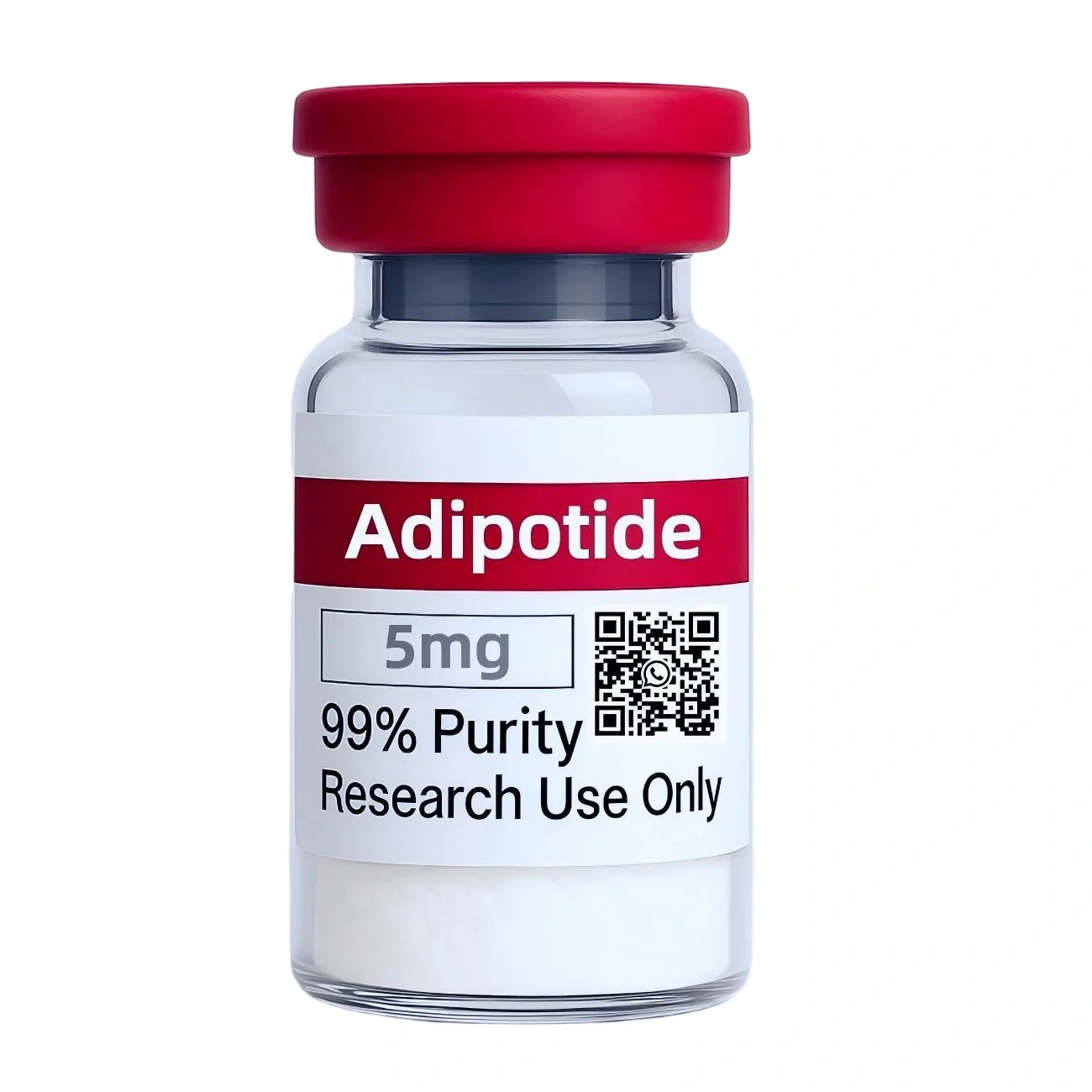
Experimental peptidomimetic targeting the vasculature of white adipose tissue. Subject of preclinical investigation into proapoptotic mechanisms in fat-associated endothelial cells.
Adipotide is a research compound available through our china peptide catalog as a finished, lyophilized vial from an established Chinese manufacturer. It belongs to the Bifunctional proapoptotic peptidomimetic (targeting + killing domains)
Research Areas
Adipose vascular biology, selective tissue targeting, proapoptotic peptide pharmacology, obesity models
Available Variants
| Name | Strength | Pack Size | Purity | Availability |
|---|---|---|---|---|
| Adipotide | 2 mg | 10 vials | ≥98% | In Stock |
| Adipotide | 5 mg | 10 vials | ≥98% | In Stock |
Specification Highlights
Quality & Testing
Testing method: HPLC / LC-MS ([“Water Content”,“LC-MS”,“HPLC”]) . Products are supplied against the specification shown on the applicable product page. The standard catalog purity specification is ≥98% unless otherwise stated. Product-specific specifications and quality-control information may vary by compound and batch. Available documentation: .
**Where provided, these documents reflect the manufacturer’s batch testing for this compound.
Research Areas
Prohibitin-Targeted Vascular Research Prohibitin is expressed on the luminal surface of white adipose vascular endothelium, providing a target for the CKGGRAKDC homing domain of adipotide. Research has characterized prohibitin’s role in adipose vascular biology, its expression across different fat depots (visceral versus subcutaneous), and how prohibitin surface availability changes with obesity state. Adipotide serves as a pharmacological probe for studying prohibitin function and vascular targeting in adipose tissue. Proapoptotic Peptide Pharmacology The D(KLAKLAK)₂ killing domain is an amphipathic, membrane-disrupting peptide that preferentially attacks mitochondrial inner membranes — a strategy originally developed for targeted cell killing in cancer research. In adipotide, this domain is redirected to adipose vascular endothelium via the CKGGRAKDC homing sequence. Research has examined the selectivity of this mitochondrial disruption mechanism in adipose versus non-adipose endothelial cells, and the dose-response relationship between mitochondrial damage and apoptotic cell death in vitro. Adipose Tissue Ischemia Research When adipose vasculature is targeted and apoptosis induced in endothelial cells, the downstream effect is reduced blood supply to adipose tissue — producing ischemia-driven adipocyte death. Research in rodent obesity models has examined the temporal sequence from endothelial apoptosis to adipocyte death, the histological characteristics of adipotide-treated adipose tissue (TUNEL staining, CD31 vascular density), and the metabolic consequences of adipose depot reduction. ## Sourcing Adipotide From China
Adipotide is available through our platform as a china peptide sourced directly from an established Chinese manufacturer. Three points define how we handle it:
- Factory-direct, not trader-sourced. We confirm availability and specification with the manufacturer before the order is confirmed. There is no intermediary resale of unknown-origin vials in this catalog.
- Specification before shipment. The purity and concentration specification shown on this page is the manufacturer’s batch specification. Product-specific quality-control information travels with the order.
- Research-use discipline. Like every listing in our catalog, Adipotide is supplied for laboratory research use only, under strict research-use terms.
For buyers comparing chinese peptides suppliers, the practical test is whether the seller can name the manufacturer and show the batch documentation. We work the other way around: the manufacturer and the documentation are the offer. Browse the full catalog or see how sourcing works.
Available Variants
| Name | Strength | Pack Size | Purity | Availability |
|---|---|---|---|---|
| Adipotide | 2 mg | 10 vials | ≥98% | In Stock |
| Adipotide | 5 mg | 10 vials | ≥98% | In Stock |
Specification Highlights
Quality & Testing
Testing method: HPLC / LC-MS ([“Water Content”,“LC-MS”,“HPLC”]) . Products are supplied against the specification shown on the applicable product page. The standard catalog purity specification is ≥98% unless otherwise stated. Product-specific specifications and quality-control information may vary by compound and batch. Available documentation: .
**Where provided, these documents reflect the manufacturer’s batch testing for this compound.
Research Areas
Prohibitin-Targeted Vascular Research Prohibitin is expressed on the luminal surface of white adipose vascular endothelium, providing a target for the CKGGRAKDC homing domain of adipotide. Research has characterized prohibitin’s role in adipose vascular biology, its expression across different fat depots (visceral versus subcutaneous), and how prohibitin surface availability changes with obesity state. Adipotide serves as a pharmacological probe for studying prohibitin function and vascular targeting in adipose tissue. Proapoptotic Peptide Pharmacology The D(KLAKLAK)₂ killing domain is an amphipathic, membrane-disrupting peptide that preferentially attacks mitochondrial inner membranes — a strategy originally developed for targeted cell killing in cancer research. In adipotide, this domain is redirected to adipose vascular endothelium via the CKGGRAKDC homing sequence. Research has examined the selectivity of this mitochondrial disruption mechanism in adipose versus non-adipose endothelial cells, and the dose-response relationship between mitochondrial damage and apoptotic cell death in vitro. Adipose Tissue Ischemia Research When adipose vasculature is targeted and apoptosis induced in endothelial cells, the downstream effect is reduced blood supply to adipose tissue — producing ischemia-driven adipocyte death. Research in rodent obesity models has examined the temporal sequence from endothelial apoptosis to adipocyte death, the histological characteristics of adipotide-treated adipose tissue (TUNEL staining, CD31 vascular density), and the metabolic consequences of adipose depot reduction.
Compound Profile
Adipotide (CKGGRAKDC-GG-D(KLAKLAK)₂) is a synthetic proapoptotic peptidomimetic designed with a bifunctional architecture: a targeting domain (CKGGRAKDC) that homes to prohibitin on the vascular endothelium of white adipose tissue, linked via a GG spacer to a killing domain (D(KLAKLAK)₂) that disrupts mitochondrial membranes and induces apoptosis in targeted cells. The rationale behind adipotide is selective destruction of the vasculature feeding white adipose tissue deposits — reducing blood supply and inducing adipocyte death through ischemia, without systemic effects on other tissues that do not express the target receptor. Preclinical research in non-human primates (rhesus macaques) and rodent obesity models has examined adipotide’s effects on body weight, fat mass distribution, and metabolic parameters. The prohibitin-targeting component was identified through phage display peptide library screening of white adipose vasculature, and adipotide represents the lead compound from that work. Research findings in non-human primates documented significant fat mass reduction, particularly in visceral adipose depots, with effects on renal tubular cells as the primary documented off-target toxicity — a research finding of significant mechanistic interest for understanding prohibitin expression in kidney versus adipose tissue. Peptides of China supplies Adipotide as a lyophilized powder at 99%+ purity, verified by HPLC and Mass Spectrometry. Every batch is tested by the manufacturer for purity and concentration as part of routine quality control. All products are for laboratory research use only and are not for human consumption.
Profile
Research Areas
Adipose vascular biology, selective tissue targeting, proapoptotic peptide pharmacology, obesity models
Available Variants
| Name | Strength | Pack Size | Purity | Availability |
|---|---|---|---|---|
| Adipotide | 2 mg | 10 vials | ≥98% | In Stock |
| Adipotide | 5 mg | 10 vials | ≥98% | In Stock |
Specification Highlights
Quality & Testing
Testing method: HPLC / LC-MS ([“Water Content”,“LC-MS”,“HPLC”]) . Products are supplied against the specification shown on the applicable product page. The standard catalog purity specification is ≥98% unless otherwise stated. Product-specific specifications and quality-control information may vary by compound and batch. Available documentation: .
**Where provided, these documents reflect the manufacturer’s batch testing for this compound.
Research Areas
Prohibitin-Targeted Vascular Research Prohibitin is expressed on the luminal surface of white adipose vascular endothelium, providing a target for the CKGGRAKDC homing domain of adipotide. Research has characterized prohibitin’s role in adipose vascular biology, its expression across different fat depots (visceral versus subcutaneous), and how prohibitin surface availability changes with obesity state. Adipotide serves as a pharmacological probe for studying prohibitin function and vascular targeting in adipose tissue. Proapoptotic Peptide Pharmacology The D(KLAKLAK)₂ killing domain is an amphipathic, membrane-disrupting peptide that preferentially attacks mitochondrial inner membranes — a strategy originally developed for targeted cell killing in cancer research. In adipotide, this domain is redirected to adipose vascular endothelium via the CKGGRAKDC homing sequence. Research has examined the selectivity of this mitochondrial disruption mechanism in adipose versus non-adipose endothelial cells, and the dose-response relationship between mitochondrial damage and apoptotic cell death in vitro. Adipose Tissue Ischemia Research When adipose vasculature is targeted and apoptosis induced in endothelial cells, the downstream effect is reduced blood supply to adipose tissue — producing ischemia-driven adipocyte death. Research in rodent obesity models has examined the temporal sequence from endothelial apoptosis to adipocyte death, the histological characteristics of adipotide-treated adipose tissue (TUNEL staining, CD31 vascular density), and the metabolic consequences of adipose depot reduction.